Indigenous research partnerships are central to the National Environmental Science Program’s approach and a vital part of caring for Country. The Sustainable Communities and Waste (SCaW) Hub values the knowledge, perspectives and cultures of Indigenous Australians and supports their aspirations to maintain, protect and manage Country. Guided by the Hub’s Indigenous Facilitator, Associate Professor Mandy Downing, this work is helping create lasting and meaningful collaborations.
Why Indigenous engagement matters
The Hub works alongside Indigenous land and sea managers to weave together Indigenous and Western knowledge systems. Indigenous-led approaches strengthen research, improve understanding of Country and provide benefits for both communities and the environment.
The Hub’s approach is guided by NESP’s Indigenous partnership principles:
- Respect and mutual benefit
- Right to Indigenous Cultural and Intellectual Property (ICIP)
- Co-created research
- Indigenous-led governance
- Relationships-focused
- Tailored approaches
These principles help ensure that research is not only scientifically robust but also culturally respectful. Co-developed projects create outcomes that support reconciliation and deliver social and environmental benefits.
Learning through partnership
One example is the experience of Hub researcher Dr Amanda Wheeler. Born outside Australia, Dr Wheeler had not previously worked in Indigenous-focused research. Through support from colleagues, A/Prof Downing and NESP, she learned how to build respectful partnerships and operate within different knowledge systems. This experience helped shape her research and highlighted the importance of genuine engagement for achieving impact.
Let’s yarn about smoke
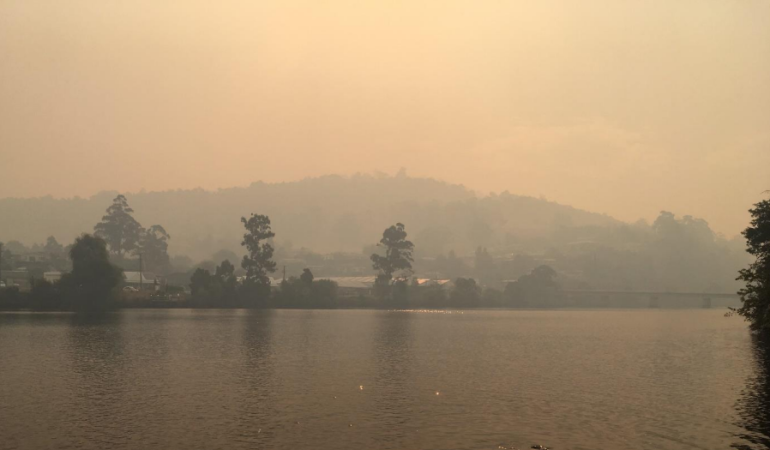
Dr Wheeler and fellow researcher Dr Erin Dunne lead the “Let’s Yarn About Smoke” project under Impact Priority 4: Air Quality. The project focuses on how landscape fire smoke affects Indigenous communities and explores ways to improve communication and health outcomes.
The team has partnered with Indigenous researchers, organisations and communities to co-develop approaches to smoke research and messaging. Yarning circles, for example, have been used to understand how smoke events are experienced and how best to share forecasts with communities.
In March 2023, the team co-hosted the Key Thinker’s Forum on Air Quality, Asthma and Indigenous Health. This event brought together researchers, Indigenous representatives and community leaders to share perspectives. It also helped map research underway across New South Wales, the Northern Territory and Western Australia. Through collaboration, projects are now sharing data and insights to improve understanding of smoke exposure and its impacts.
The project has also trialled Indigenous citizen scientist-led data collection in the Northern Territory. By employing Yolngu researchers through local health services, the work not only gathers valuable data but also builds long-term career pathways.
Towards stronger outcomes
Engaging Indigenous knowledge and perspectives has already strengthened this research. The team is preparing a commentary paper on the unique methods used to connect with communities and share findings. The approach demonstrates how science can be enriched when Indigenous voices and leadership are embedded from the start.
A step towards reconciliation
The Hub’s commitment to Indigenous partnerships is more than a research method – it is a step towards reconciliation. By building trust, respecting ICIP and fostering mutual learning, the Hub aims to create knowledge that benefits communities and protects Country. The lessons from “Let’s Yarn About Smoke” show that meaningful engagement is essential for research that seeks real and lasting impact.
