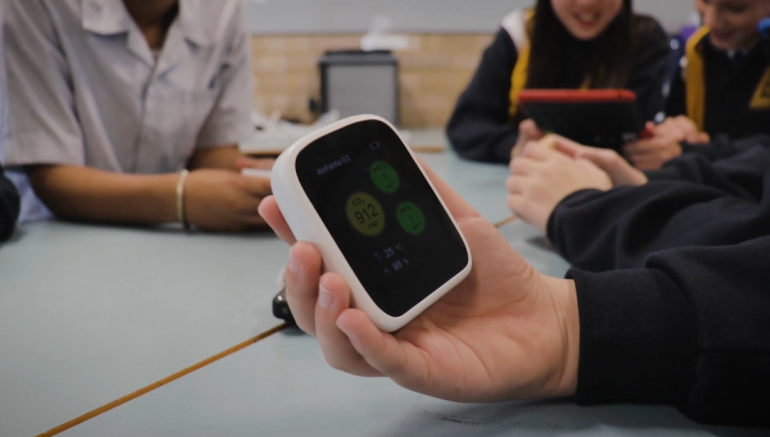
The Sustainable Communities and Waste Hub’s Evaluating Safe Havens and Low-Cost Sensors project is working to improve indoor air quality in Victorian schools.
The project aims to mitigate indoor air pollution by providing a better understanding and management options with affordable sensors and filtration using HEPA (High-Efficiency Particulate Air) systems.
The project has already produced several outputs, including:
- The Air Quality Monitor Section Tool
- Detailed guidance for households, community groups, schools, local governments and researchers on what to consider when looking for a monitor.
This research is important because of:
- growing public awareness of the negative impacts of air pollution on human health
- a general lack of awareness about how best to monitor and improve indoor air pollution
- the limited information available on how to reduce indoor pollution if it is present.
The project has recently expanded school-based air quality monitoring work from the NSW Fresh Air Innovators program into case study sites in Victoria.
Project lead, Professor Donna Green at UNSW, was approached by the Burnet Institute, which is conducting the ‘Pathway to Clean Air’ project in Victorian schools and public buildings.
The Hub’s research aims to use evidence-based approaches to improve indoor air quality in Victorian schools and to educate school communities about the health and learning benefits associated with these approaches.
Watch to learn more about the research project:
