
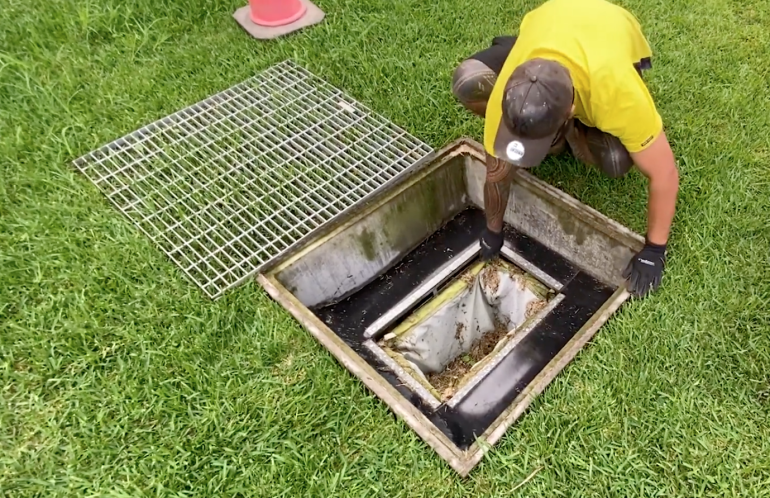
About 80 percent of ocean plastic pollution reaches the sea via stormwater from urban areas, and in Australia, there’s very little treatment or even filtration of this water and the waste it carries.
New research from the Sustainable Communities and Waste Hub shows that filtration systems installed in stormwater drains can capture substantial quantities of microplastics before they enter waterways, and that commercial areas should be the priority for installation.
The stormwater problem
Urban stormwater runoff is the main source carrying plastic into rivers, estuaries and the ocean. Rainwater runs off roads and buildings into drainage systems of gutters, drains and underground pipes, collecting organic materials like leaves and twigs – but also discarded waste, chemicals and plastic fragments.
Big cages known as ‘gross pollutant traps’ capture some larger waste, but substantial loads of macro and microplastics flow on to the sea, where they persist for decades.
How filtration works
Daniel Rider, water sensitive urban design specialist at Ocean Protect, says studies have found that about 80 per cent of ocean plastic pollution reaches the ocean via stormwater from urban areas.
“Unlike sewage which goes through treatment plants, there is no treatment plants for stormwater,” he says.
In 2025, researchers from UNSW Sydney partnered with Ocean Protect to conduct a study using the company’s OceanGuard filtration systems, already installed across Sydney. The study investigated the composition and quantities of plastics captured from urban stormwater.
The researchers sampled stormwater from industrial sites, commercial carparks and residential streets, analysing what the filters captured before the runoff (and the plastics it carried) entered the public drainage network.
The company’s filtration systems captured substantial quantities of fine microplastics (above 200 micrometres), medium fragments and larger debris that would otherwise flow downstream.
The researchers point out that capturing material at their source is far more effective and cost-efficient than attempting clean-up after plastics have dispersed into waterways.
VIDEO: Daniel Rider explains how the OceanGuard systems capture microplastics and stormwater debris before it makes its way into urban waterways
Where to prioritise filtration systems
The research team, led by Professor Veena Sahajwalla and Dr Sanjith Udayakumar, with doctoral researchers Sofia Payel and Asiyeh Kheradmand, found clear differences between the types of sites that were tested.
Commercial catchments generate the highest loads of both macroplastics and microplastics.
Shopping centres, office complexes and busy carparks produce more plastic pollution than other sites, due to the intensive human activity, vehicle movement and packaging waste occurring there.
Industrial sites contributed large plastic items that fragment into microplastics over time, while residential areas produced less total plastic - but a greater proportion of fine, highly mobile particles under 500 micrometres.
Policy implications
Microplastics are widespread in urban stormwater. The type of site tends to shape the way microplastics are generated and how they are transported. Fine microplastics are highly mobile, persistent and bioavailable, making them particularly concerning for aquatic ecosystems.
The findings support stronger stormwater regulation, improved placement and maintenance of treatment assets, and inclusion of microplastics in urban water quality frameworks.
Improving stormwater filtration infrastructure could make a huge difference to the amount of plastics ending up in our ocean, but the shift to better systems will be costly and time-consuming.
This research highlights the sites that can be prioritised to have the most impact.
Commercial developments need particular scrutiny given their role as the largest accumulation hotspots.
Preventing pollution at the source means “reducing plastic bags, plastic bottles, straws impacting our marine life and looking at a lot of better ecosystems and habitats and liveability for citizens across Australia,” says Rider.
**
Read the full report here
Read the Fact Sheet here
