Impact Priority 6 focuses on enabling safe and inclusive circular economy transitions across Australia. It explores how communities, businesses and governments can participate in circular economy initiatives in ways that are safe, equitable and locally relevant. The work shifts the focus from technical solutions alone to include people, place and participation at every stage.
Overview
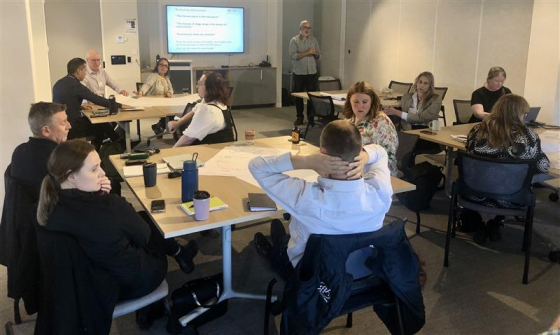
This project establishes the foundational framework for IP6 research. It lays out criteria for selecting new activities. It also maps key barriers and opportunities for safe, people-centred circular economy research.
Why?
Circular economy initiatives can be technically sound yet lack social support or fail to address local concerns about risk or inclusion. By developing a framework early, the Hub ensures IP6 research is credible, aligned with policy and relevant to communities.
What?
This project has:
- Reviewed literature on community engagement, risk perception and safe circularity
- Analysed policy and regulatory overlaps and gaps that affect community participation
- Consulted stakeholders to shape IP6 priorities
- Identified barriers and enablers for community involvement
- Produced a final scoping report outlining research directions for long-term IP6 work.
Who?
Project lead:
- Prof Matthew Kearnes, UNSW Sydney
Project team:
- Elizabeth Duncan, UNSW Sydney
What’s coming?
The main output will be a scoping report that outlines:
- Community needs and opportunities for participation
- priority research directions for community-engaged circular economy research
- tools and recommendations for government, councils and industry to build trust and accessibility.
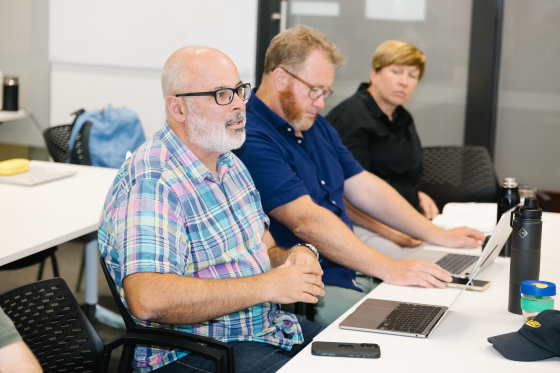
This project builds on the IP6 framework in the completed project by designing a people-centred approach to circular economy transition. It develops a national model for community engagement that is grounded in evidence and practice.
Why?
Australian circular economy targets require broad participation. Technical and policy changes alone will not achieve these goals without strong community involvement. Engagement must be meaningful, inclusive and adaptable to different places, especially regional and remote areas.
What?
The project:
- Works with experts, policymakers, councils, industry and community members
- conducts interviews and workshops to collect lived experience
- maps types of participation and engagement barriers
- tests engagement strategies in urban, regional and rural locations
- assesses how formal and informal initiatives support circular action on the ground.
Who?
Project lead:
- Prof Matthew Kearnes, UNSW Sydney
Project team:
- Madeleine Miller, UNSW Sydney
- Brian Cook, University of Melbourne
- Stefan Kaufman, Monash University
- Paul Kellner, Monash University
- Elizabeth Duncan, UNSW Sydney
What’s coming?
- Community Engagement Framework
A structured approach to embedding community engagement in circular economy policy and practice.
- Best Practice Guide for Engagement
Practical guidance with examples, tools and checklists for users such as councils and community groups.
Community-driven insights from this project will shape how states, territories and local governments involve people in CE decisions.
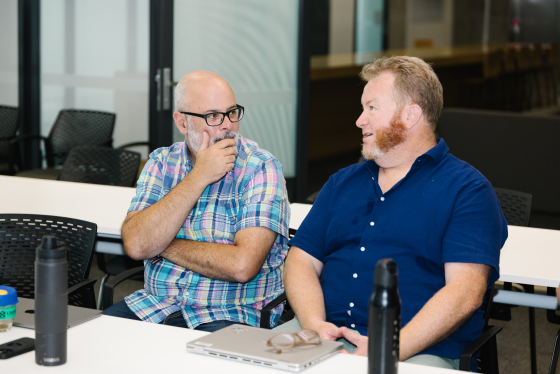
This project turns policy ambition into actionable resources for business. It develops practical tools, templates and pathways that help businesses operate in a circular way.
Why?
Businesses and organisations need clear, accessible guidance that translates national circular economy goals into everyday decisions. Many lack the tools or confidence to apply circular principles to procurement, design, waste management or collaboration. This project responds to that need.
What?
The team will:
- Analyse capability gaps and sector-specific barriers.
- Hold sector workshops to identify transition pathways.
- Co-design practical toolkits with business users.
- Build an online CE Transition Practice Platform.
- Curate tools and case studies for uptake.
Tools may include:
- Design and traceability templates.
- Procurement models for circular sourcing.
- Material passports and measurement methods.
- Shared infrastructure playbooks for regions.
Who?
Project lead:
- Darren Sharp, Monash University
Project team:
- Stefan Kaufman, Monash University
- Martin Geissdoerfer, Monash University
- Paul Kellner, Monash University
- Nicole Gorofano, Independent Researcher
What’s coming?
- Sector toolkit suites.
- Behaviour-guided transition maps.
- Adoption guides for SMEs and councils.
- A publicly available online practice platform.
These resources aim to reduce complexity, support consistent action and connect businesses to circular economy practice.

