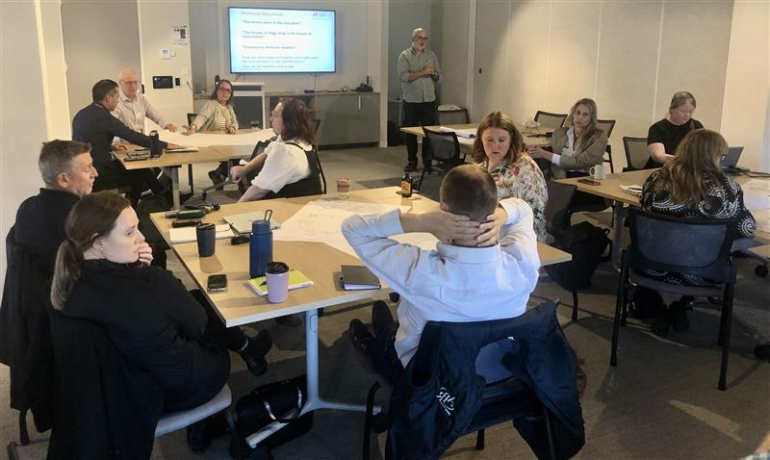
Stakeholders from across Gippsland’s agricultural, recycling and government sectors came together in Morwell on 16 October for a hands-on workshop tackling one of the region’s biggest on-farm waste challenges: silage wrap. The session formed part of the Hub’s Impact Priority 6: Circular Economy Community Engagement work on circular economy and community engagement.
Why agricultural plastics matter
Many Victorian farmers want better recycling pathways for silage wrap, but current systems are limited. As highlighted at the workshop, most silage wrap is currently landfilled, buried or burnt, despite being a valuable recyclable material. Financial modelling shared on the day showed:
$350 – estimated lifetime cost for councils to landfill one cubic metre of silage wrap
$150 – estimated cost to recover and recycle the same volume
IP6 leadership under Professor Matthew Kearnes
Our Hub's Professor Matthew Kearnes and Elizabeth Duncan from UNSW were key contributors to the workshop. Their IP6 research on circular systems shaped the workshop’s collaborative design. Matthew facilitated the afternoon session, guiding cross-sector groups to map barriers and co-design practical, locally grounded solutions for recovery infrastructure, logistics and viable end markets.
Building a regional circular network
The event brought together stakeholders including:
- Sustainability Victoria (event organiser)
- Dairy Australia
- East Gippsland Shire Council
- AgSafe – including DrumMUSTER and BagMUSTER
- Integrated Recycling
- Sustainable Plastic Solutions
- Local farmers across Gippsland
- Local councils from across the region
- Recycling and reprocessing businesses
- Victorian Government representatives
- Industry bodies connected to agriculture and waste
Workshop discussions touch on:
- Transport and aggregation challenges
- Processing capabilities for soft agricultural plastics
- Existing stewardship programs
- Opportunities to scale successful trials
Councils, industry bodies, recyclers and farmers all expressed enthusiasm for continuing the work and expanding the model into other Victorian regions. The workshop successfully laid the foundation for an ongoing regional network committed to solving agricultural plastic challenges collaboratively
