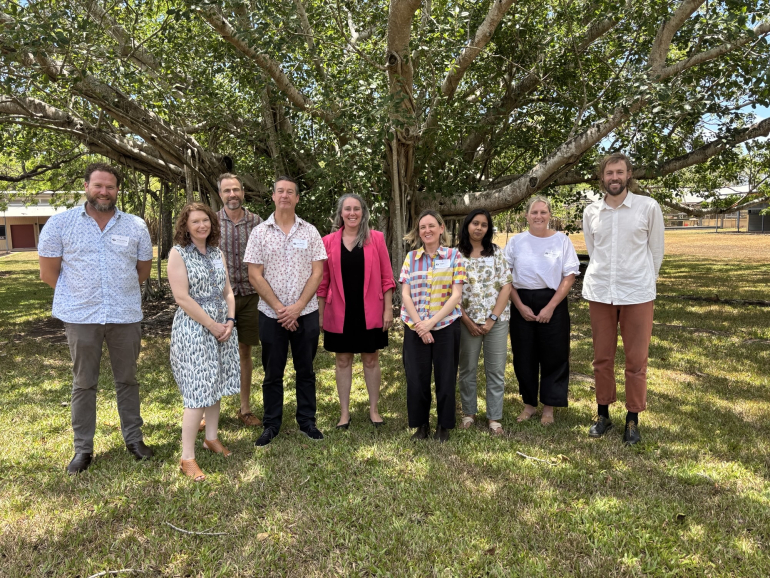
Last week, the Water Sensitive and Liveable Communities in Regional and Remote Australia team travelled to Darwin to host a collaborative workshop focused on improving water security, servicing and liveability outcomes across regional and remote communities.
The workshop brought together partners and experts from across Australia who are leading efforts in remote and regional water management and capability development.
A shared effort across sectors
Participants included representatives from:
- Ekistica
- Desert Knowledge Australia
- Goyder Institute for Water Research
- Water Services Association of Australia
- WaterAid
- Researchers from Monash University, CSIRO and Curtin University.
Each organisation shared insights from ongoing initiatives supporting remote and regional water access, climate adaptation and capacity building. The group brought together a diverse mix of expertise across:
- Community leadership and advocacy
- Technical enablement, training and education
- Research collaboration and knowledge translation
- State and federal policy and regulatory alignment
- Water utility service delivery
Finding common ground
Despite coming from different backgrounds, the group identified strong alignment on the priorities needed to support water-sensitive and liveable futures. Key themes included:
- Developing appropriate technologies and servicing models
- Advancing place-based and Country-centred water planning
- Enabling systems change for equitable resource provision
- Strengthening bi-cultural and cross-cultural governance
- Supporting sustainable livelihoods and community-led solutions
Towards an integrated approach
Participants envisioned a partnership-based approach that brings together technical, cultural and institutional expertise to create more integrated, coordinated and sustainable water management systems.
The recently established National Platform agenda (Phase One report) provided a useful foundation for exploring this integrated vision, helping identify shared aspirations for long-term transformative change.
Next steps
The next phase of work will focus on fostering the emerging collaborative network and supporting the strategic and operational development of this shared agenda. Ongoing input from key stakeholders and rightsholder groups will be essential to ensure outcomes are both equitable and enduring.

