New research from the Sustainable Communities and Waste (SCaW) Hub provides the first detailed picture of how every Australian state and territory has progressed towards a circular economy. It shows that while recycling has improved over the past 14 years, demand for new materials continues to outpace it.
“Cutting waste needs to happen long before materials reach the recycling bin,” says Professor Heinz Schandl, senior science leader at CSIRO who co-authored the report with Dr Alessio Miatto.
“We reduce waste by designing products and buildings to last longer, using materials more efficiently, and keeping valuable resources in use for as long as possible. For the first time, we can show how each state and territory in Australia is tracking.”
The report, Circularity metrics for Australia’s states and territories, uses a common set of measures to track material use, waste generation, recycling, greenhouse gas emissions and resource productivity from 2010 to 2024.
The findings show that Australia’s economy still depends heavily on extracting and using new raw materials. Population growth, expanding cities and major construction projects continue to drive demand for virgin materials, while recycled materials meet only a small share of that demand.
Circularity rates remain low, at around four per cent in Australia’s major states.
Western Australia, Queensland and the Northern Territory, where mining and resource industries dominate, recorded lower circularity rates. By contrast, New South Wales, Victoria and the ACT, where growing cities drive demand for housing and infrastructure, rely more heavily on imported materials than local extraction.
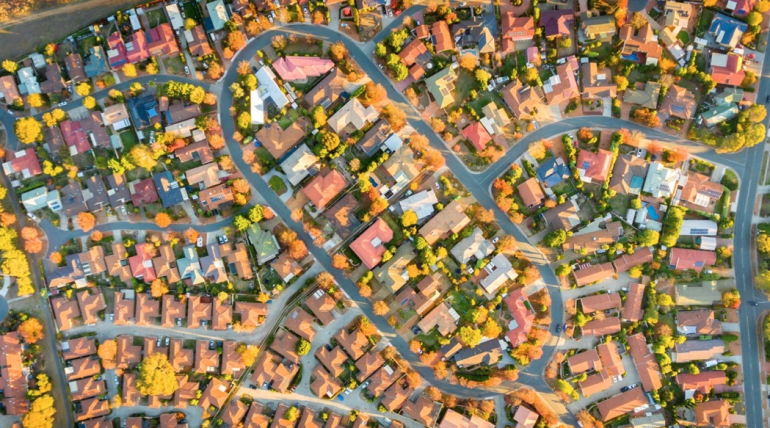
One of the report’s clearest findings is that Australia’s built environment is the biggest driver of material use and waste. Buildings, roads and other infrastructure account for the largest share of material demand, highlighting the need for longer-lasting buildings, greater use of recycled materials and beter design.
The research concludes that improving recycling remains essential, but it cannot deliver the scale of change needed on its own.
“The best gains towards circular economy will come from reducing demand for new materials, extending the life of products and infrastructure, designing out waste and creating stronger markets for recovered materials,” says Professor Schandl.
Rather than adopting a one-size-fits-all approach, the report recommends strategies tailored to the industries, economies and resource challenges of each state and territory.
The framework gives governments a consistent way to measure progress, compare performance between jurisdictions and identify practical opportunities to strengthen Australia’s transition to a circular economy.
The report forms part of the SCaW Hub’s research supporting Australia’s transition to a safe and sustainable circular economy by providing practical evidence to inform policy, investment and long-term decision-making.
Read the report: Circularity metrics for Australia’s states and territories.
Authors: Professor Heinz Schandl and Dr Alessio Miatto, CSIRO.
Funding acknowledgement
This project is supported with funding from the Australian Government under the National Environmental Science Program.
