A new study from the Hub’s Understanding Microplastics project team offers fresh insight into how common household plastics fragment into microplastics, and what this means for environmental and human exposure.
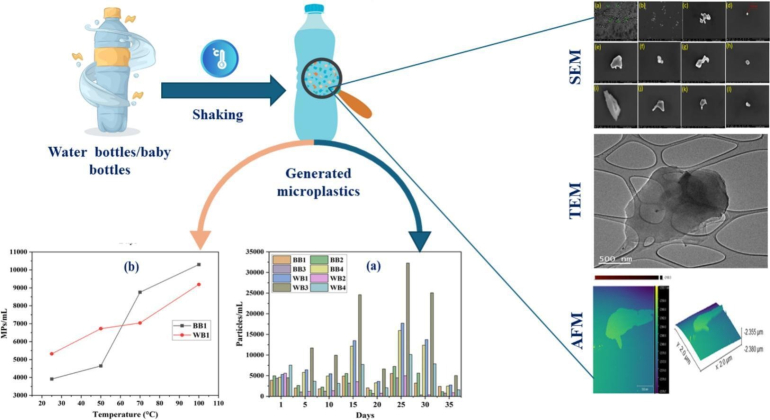
Published in the Environmental Nanotechnology, Monitoring & Management journal, the research examined how polypropylene (PP) — the plastic used in items like infant feeding bottles and reusable drink bottles — breaks down under real-world mechanical and thermal stress.
The team then analysed the particles released, identifying a wide variety of sizes, shapes and chemical signatures.
Why it matters
Understanding how and why microplastics form is essential for improving monitoring, risk assessments and long-term mitigation strategies. The study shows:
- PP releases highly diverse microplastic particles as it degrades.
- These particles vary in their physical and chemical properties, which affect how they travel through the environment.
- Microplastic exposure may depend not only on product type but on how items are used and stressed over time.
Informing the management of plastics
This research supports the Hub’s Impact Priority 2: Plastic and Waste Materials. The findings help build the scientific foundation needed to:
- develop more accurate national monitoring methods
- better identify microplastic sources and pathways
- inform policy and industry actions to reduce microplastic release.
By improving our understanding of microplastic formation from everyday products, this study strengthens Australia’s ability to track and manage one of today’s most persistent pollutants.
