The Sustainable Communities and Waste Hub’s Impact Priority 3: Hazardous Waste and Pollutants (IP3) team has developed a new, more realistic way to assess how potentially harmful chemicals leach from materials made from recycled tyre rubber, especially roads and pavements.
Published in Environmental Science: Processes & Impacts, the paper “A Novel Method for Assessing Chemical Leaching from Surface Water-Pavement Interactions” presents a static surface leaching procedure (SSLP) that better mimics how rainwater interacts with rubberised asphalt and pavement over time.
Key Findings
- Traditional leaching tests use agitated batches, which may overestimate how much chemical comes out of materials.
- The SSLP method runs over 2–14 day periods and more closely represents real-world rainfall/runoff exposure.
- When applied to rubberised pavement with different proportions of crumb rubber, the method picked up different leaching behaviour depending on rubber content, showing that SSLP is sensitive to formulation.
- Key chemicals tested (like 1,3-diphenylguanidine, HMMM, and 6PPD-quinone) remained below predicted toxicity thresholds for fish and small aquatic organisms.
- The researchers suggest SSLP could be applied to other reuse scenarios, such as leaching from concrete or asphalt containing other legacy or emerging contaminants (e.g. PFAS).
Why This Matters for the Circular Economy
This work is a perfect example of IP3’s pathway to impact of improving the assessment of risks from chemicals in products made from recycled waste, so we can reuse materials safely, especially in infrastructure. IP3’s research program is co-designed to help policymakers, industry and regulators make evidence-based decisions about reuse of wastes.
By providing a more realistic leaching method, the team is building tools that:
- Strengthen the scientific basis for risk assessment of chemicals in recycled materials.
- Feed directly into the guidelines and frameworks that IP3 is developing for safe reuse.
- Support circular economy uptake while helping regulators and industry understand and mitigate chemical risks.
Broader Context & Impact
- This aligns with the Hub’s broader strategy of characterising what’s in waste, assessing potential risk and translating that into governance tools.
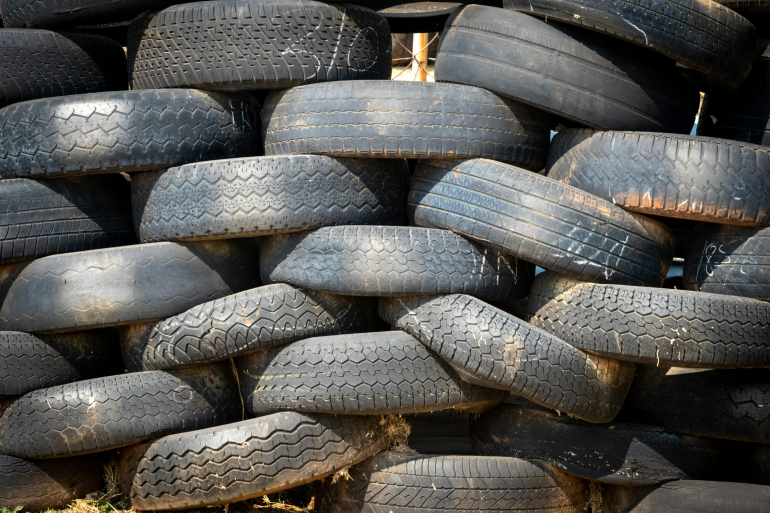
- The work specifically supports safe reuse of end-of-life tyres, one of IP3’s core case-study materials, through nationally relevant, co-designed research.
- Beyond just the lab, it contributes to real-world decision-making: safer recycling, more informed regulation and more confidence in reuse infrastructure.
Thank you to the authors: Prashant Srivastava, Mitzi Bolton, Naomi J. Boxall, Sonia Mayakaduwage, Avanthi Igalavithana, John L. Rayner and Greg B. Davis
