Circular economy opportunities highlighted at Developing Northern Australia Conference
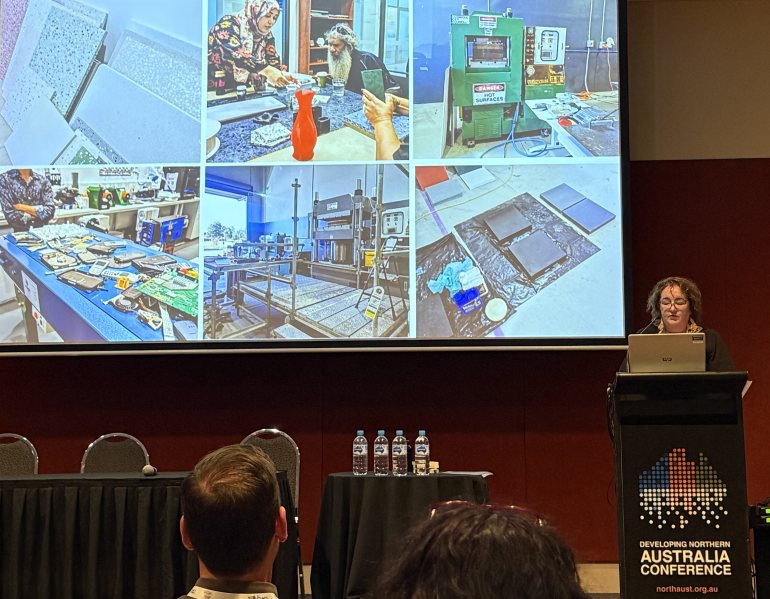
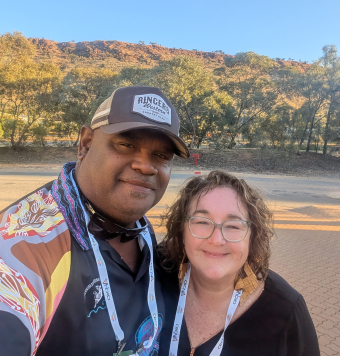
Hub collaborator Jen McHugh from the Cairns Institute at James Cook University recently joined Councillor Ernest Madua from Napranum Aboriginal Shire Council to present on circular economy opportunities for remote communities at the Developing Northern Australia Conference in Mparntwe (Alice Springs).
The annual forum attracted more than 400 delegates from government, industry, First Nations organisations, research, investment and regional development.
Jen’s project with the Hub will support local governments across Far North Queensland to better understand their waste challenges and identify practical circular economy opportunities.
Together, Jen and Ernest highlighted the burden waste management places on remote and discrete First Nations communities. Distance, limited infrastructure and small waste volumes can make conventional recycling models difficult and costly.
Their presentation explored a shift from “economies of scale” towards “economies of purpose”. This recognises the wider social, cultural, environmental and economic value that smaller, locally appropriate circular economy solutions can deliver.
Jen and Ernest showcased samples of green ceramic tiles produced through emerging resource recovery technologies. The samples demonstrated how waste materials could potentially be transformed into useful products.
On the ground
Councillor Madua described how the community of Napranum, more than 800 kilometres by road from Cairns, experiences many of these challenges firsthand.
“Bringing this technology into Community can bring change for the better, especially for the sake of a cleaner and healthier environment within our community and on country,” Councillor Madua says.
“A diverse, full common-sense approach, rather than a complex approach, allows us to be a part of the economy, bring about whole-of-community inclusion, possibly employment,” he adds.
“More importantly, being responsible for our community and country, to also complement our cultural obligation/s, plus establish a revenue base that could possibly cater to the wider communities and region. This is not just about making a statement, it's about contributing to creating a cleaner, safer and healthier environment for now and for the future.”
The presentation generated strong interest from First Nations organisations across the Northern Territory, Western Australia and Queensland, as well as universities and other organisations interested in learning more.
As an Alngith First Nations Custodial Descendent, Ernest said attending DNAC was an excellent opportunity.
“Being able to travel to Alice Springs for the DNAC Conference and engage directly with Indigenous communities from across Northern Australia about shifting waste from a problem to an asset was incredibly impactful.”
Jen says that the response from attendees showed a growing interest in circular economy solutions that reduce waste, strengthen local capability, create economic opportunities and support more resilient remote communities.

