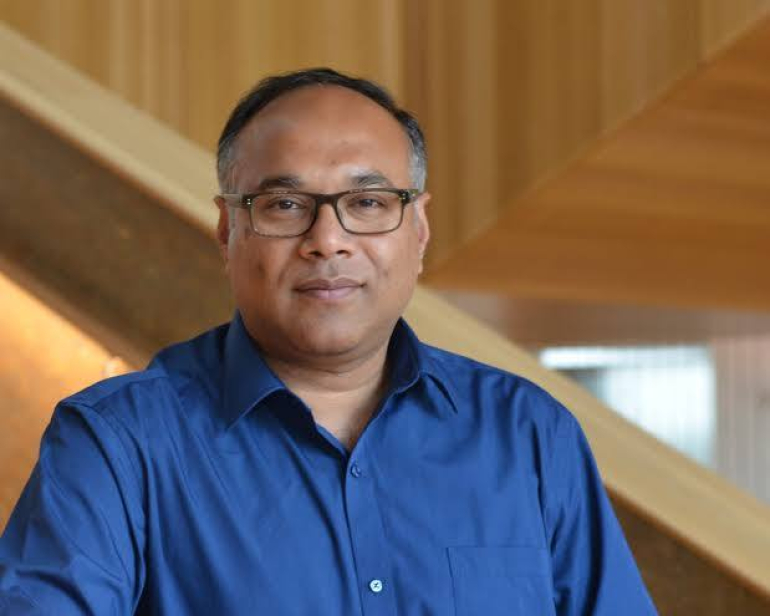
Associate Professor Atiq Zaman is a circular economy and zero-waste expert who led the SCaW Hub's project exploring circular economy opportunities with and for Indigenous communities in Western Australia. He has partnered with governments, businesses, industries, communities, and global agencies — including as a member of the UN Council of Engineers for Energy Transitions. From environmental engineer in Bangladesh to reporting supply chain emissions for H&M in Sweden, he brought extensive industry experience into academia and is now Associate Professor at the Curtin University Sustainability Policy Institute, School of Design and the Built Environment.
What was the central finding of the project?
The circular economy is not a new idea. That's probably the most important thing I can say. We talk about resource stewardship and designing out waste as though these are innovations. They are not. Aboriginal communities have practised them for 65,000 years. Caring for Country — as Elders described it to us — was not a philosophy. It was a daily practice in which nothing was wasted because everything had a relationship to everything else. Learning about the six seasons, and how communities lived in rotation — burning in patterns that regenerated specific plants, harvesting in ways that left more than they took — fundamentally changed how I think about my field.
How did you design the research to avoid imposing outside solutions on the community?
The whole methodology was built around that problem. From the start, we wanted the community to lead — not just participate. We built a research team where three of the six researchers had Indigenous backgrounds, including Frederick Yasso from Curtin's Centre for Aboriginal Studies as our lead Indigenous researcher, Jodie Clarke from Champion Centre, who facilitated our engagement with the Whadjuk Noongar community in Armadale and Rebecca Barlow, who joined the project at a later stage, is a circular economy creative designer and entrepreneur. The yarning sessions were shaped by Elders and community representatives. What we captured in our report is raw and specific because it came directly from them.
The yarning sessions were scheduled right after the 2023 Voice Referendum. What happened next?
The referendum failed. And despite that, the community continued with the project. They came to the sessions as planned. To me, that was the most meaningful outcome of the research — not any finding we published, but the fact that the trust we had built was real enough to survive that moment. Aboriginal research is genuinely challenging because it requires long-term reciprocity. The community has to believe the work will benefit them. That they continued was a testament to the team, and to them.
What's the biggest misconception about waste your research found?
That it's primarily a technical problem. It is not. Waste is a symptom of a cultural and economic system that treats materials as disposable. Until we address that, we're managing consequences, not causes. The second misconception — directly relevant here — is that Indigenous communities are primarily victims of waste problems rather than holders of solutions. Our research shows the opposite. The task is not to bring solutions to these communities. It is to create conditions in which their solutions can be recognised, resourced, and applied.
With so many environmental challenges, what keeps you hopeful?
I work across community, industry, government and the UN level, so I can see changes happening at the grassroots that don't always make the news. In Australia alone, since 2018 when we lost the option of shipping our waste to China, we've built real domestic capacity. Initiatives like Remade Australia are creating new products from recycled materials. We're starting to move from recycling to reuse and resource stewardship. It's not happening industry-wide yet, but the direction is clear. And the quality of the people I work with — community members, early-career researchers, PhD students — they will carry this work much further than I have.
Read more about the research project:
https://www.nespsustainable.edu.au/research/impact-priority-5-circular-economy-and-waste
Read the report:
Report: Indigenous Circular Economy Opportunities in WA (April 2026)
