Wood heaters are a feature of many Australian homes, but they remain one of the country’s most significant sources of air pollution. The Hub’s IP4: Air Quality research team is working to change that.
Why It Matters
Air pollution from wood smoke is a major public health issue. In cities, wood heater emissions account for 42% of population-weighted particulate pollution in Sydney (NSW DPIE, 2023) and 52% of annual PM2.5 emissions in Melbourne (Vic EPA, 2021). Nationally, wood smoke contributes to an estimated 700 premature deaths every year (Borchers et al., 2023), with economic impacts running into the billions.
An Extensive National Collaboration
Last week, stakeholders from across Australia gathered for a briefing to explore how this research can help limit pollution from wood heaters. Representatives from Standards Australia, state and federal governments - including environmental public health agencies, consumer advocacy groups, industry and academia joined the discussion.
Hub researchers are co-designing and co-developing this work with practitioners to ensure the project’s outputs are fit-for-purpose and impactful. Their shared focus is to reduce emissions through smarter standards, improved technologies and stronger testing protocols.
The Research at a Glance
Led by Professor Fay Johnston and a team of air quality and public health experts from the University of Tasmania, CSIRO and Curtin University, the IP4 Wood Heater Emissions project is:
- Developing a new, real-world testing protocol for wood heater emissions, based on Australian hardwoods.
- Evaluating policy options such as incentive programs and regulatory reform.
- Supporting councils in implementing proven interventions by showcasing effective techniques through pilot projects.
Initial testing shows promising results. Ultra-low emission burners (ULEBs), which have proven effective in New Zealand, are performing well with native eucalypts under the refined protocol. In contrast, preliminary testing has shown heaters designed to Australia’s current standard underperform when tested in real-world conditions.
During the meeting, Dr John Todd presented on the research project's latest progress:
Access the Woodheater Presentation
What’s Next?
The research team is working towards delivering a draft of the new test protocol in 2025. The goal is to provide the scientific foundation for a national standard that better reflects how Australians actually use wood heaters and how we can reduce the pollution they produce.
Toward Cleaner Air for All
Cleaner air in our homes and communities requires innovation backed by rigorous science. This event provided stakeholders with a platform to raise important questions about ensuring affordability for communities, reducing emissions without unintended consequences and building broad support across sectors and actors. This work will provide the foundation for improved health, equity and climate outcomes for Australia.
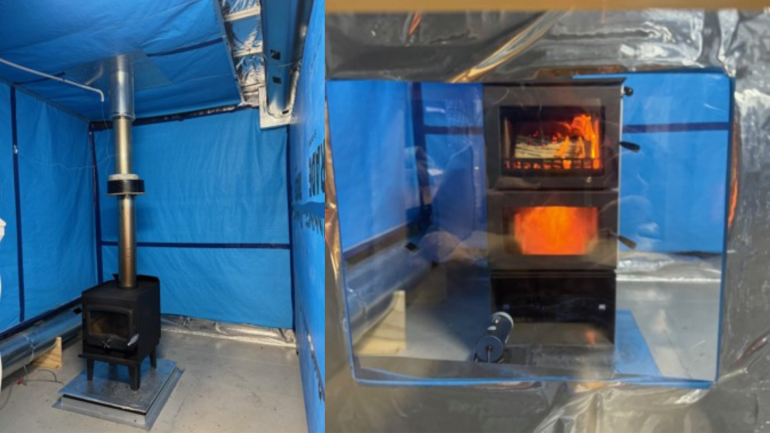
Opening Image: Wood heater emissions and efficiency experiments being conducted at University of Tasmania (source: John Todd, UTas).

