As part of the Hub’s Impact Priority 3 – Hazardous Waste and Pollutants, researchers are developing new ways to reduce risks from chemicals of concern in waste and support safer resource recovery. A new peer-reviewed paper from the IP3 team, led by Naomi Boxall, Senior Research Scientist at CSIRO, marks an important milestone in this work.
Published in Resources, Conservation & Recycling, the paper reviews current challenges and research needs for managing contaminants and chemicals in waste streams that are increasingly being reused, recycled and repurposed.
Why chemicals matter in a circular economy
Certain chemicals in waste can negatively impact circular economy outcomes. Therefore, assessing their availability and effects in reuse scenarios is key to making safe and sustainable decisions about material reuse.
While recycling and reuse are essential for a circular economy, they also raise concerns about residual chemicals of concern that may be present in remanufactured materials. Understanding these risks is crucial to ensure that circular practices protect both people and the environment.
Key insights from the paper
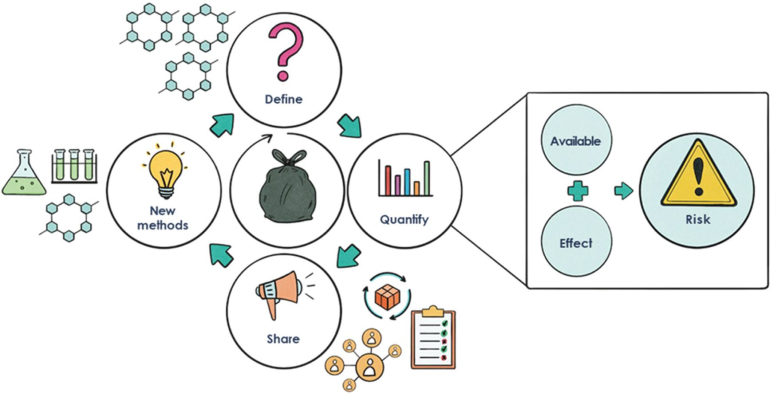
The paper identifies four key research themes to guide Australia’s approach to managing chemicals in waste:
- Detection and quantification: improving methods to identify and measure contaminants in waste materials.
- Behaviour and toxicity: understanding how chemicals behave and interact in new reuse or recycling contexts.
- Decision-making frameworks: developing tools and guidance to support safe and sustainable reuse decisions.
- Iterative assessment: applying an ongoing approach to evaluate both the availability and effects of chemicals in complex waste materials.
Contributing to national research on hazardous waste
This publication is the first peer-reviewed output from the multi-year, co-designed research program under Impact Priority 3. This research project aims to:
- Generate high-quality, actionable data on chemicals in waste.
- Develop guidance for sampling and assessing content, availability and ecotoxicity.
- Support regulators, industry and researchers to make informed, evidence-based decisions.
Supporting a safe circular future
By improving understanding of how chemicals behave in waste reuse scenarios, this work lays out the foundation for safer, more sustainable resource recovery and reuse. This aims to support Australia’s transition towards a cleaner, circular future.
Hazardous Waste and Pollutants Factsheets
